- PID
- 3740251
Eco-Friendly Anti-Scattering Agents
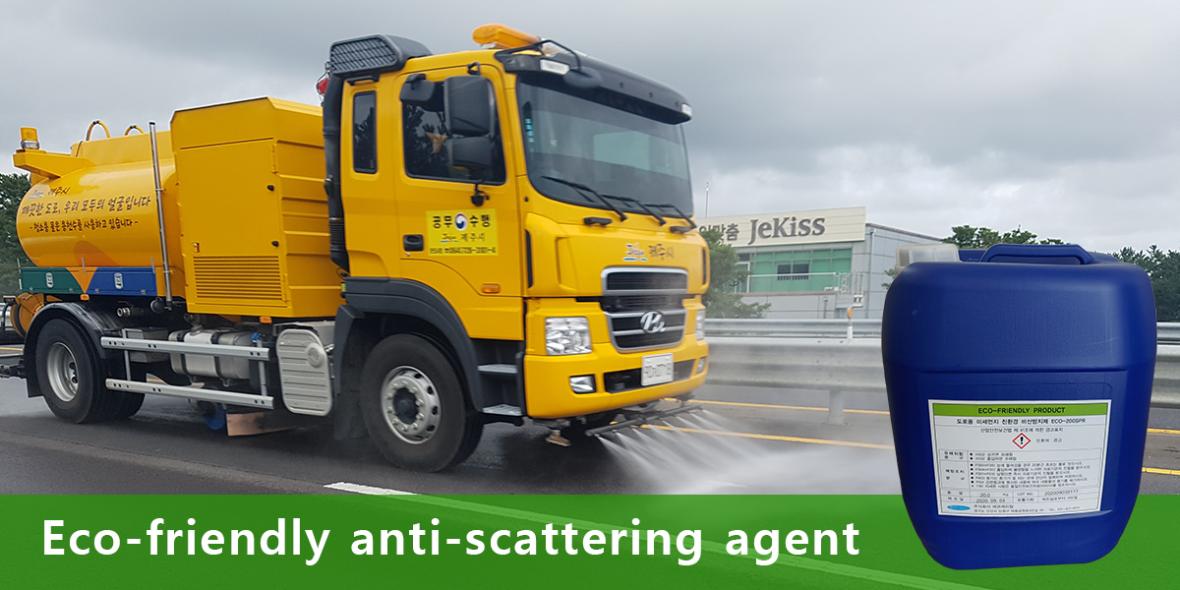
⚫ Suppresses scattering by aggregating fine dust and adsorbing it to surfaces.
2) Features of the product
⚫ Reduces fine dust using an aggregation mechanism.
⚫ Uses plant-derived polymeric compounds extracted from grains as functional materials.
⚫ Does not contain inorganic compounds, preventing the occurrence of dust from residual solids after spraying.
⚫ Does not include synthetic surfactants, preventing secondary damage to aquatic ecosystems even with long-term application.
⚫ Can be applied in various areas where fugitive dust occurs (roads, construction sites, stockyards, etc.).
3) Functionality
⚫ Aggregates fine particles smaller than 10 microns into larger dust particles over 300 microns to suppress scattering.
⚫ Dust particles aggregated to larger than 10 microns, even if dispersed, are prevented from penetrating the respiratory system.
⚫ According to the test results by the Korea Convergence Chemical Testing & Research Institute, it suppresses the scattering of ultrafine particles (PM2.5) by 98.4%.
- Certification
-
- Award
-
- Shipping
-
- Lead Time60 ~ 90days
- Type of Freight MT
- Modes of Transport Proceed after consultation
- Products Shipped From Pyeongtaek
- Payment
-
140+ Global Payments, trusted and secure payment provided by PayVerse.
Learn More
- Quantity
- MOQ : 48 Packs
Product Summary
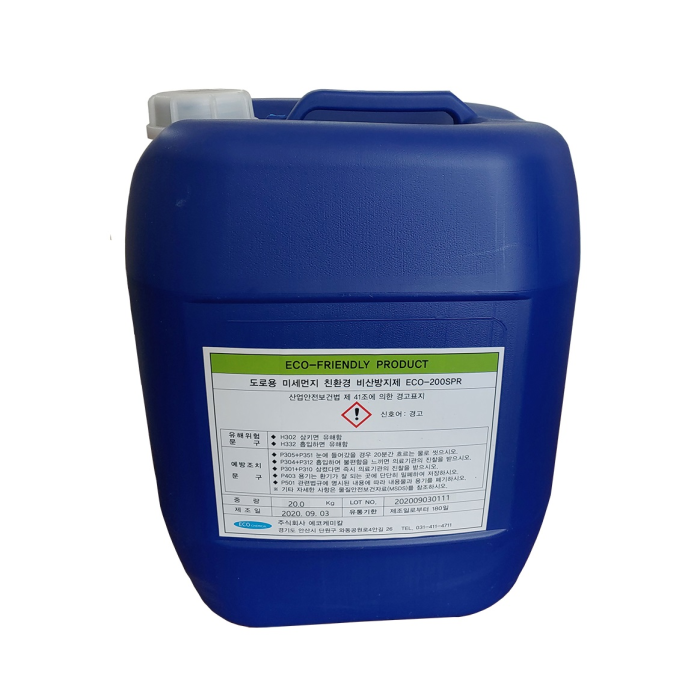
• Brand name (Ecochemical)
• Type (Liquid)
• Material (Guar gum, xanthan gum, ethanol)
• Size/Dimension (H 377mm * W 295mm * D 237mm)
• Weight (20kg)
• Usage (Prevents flying by coagulating fine dust and adsorbing it to the surface)
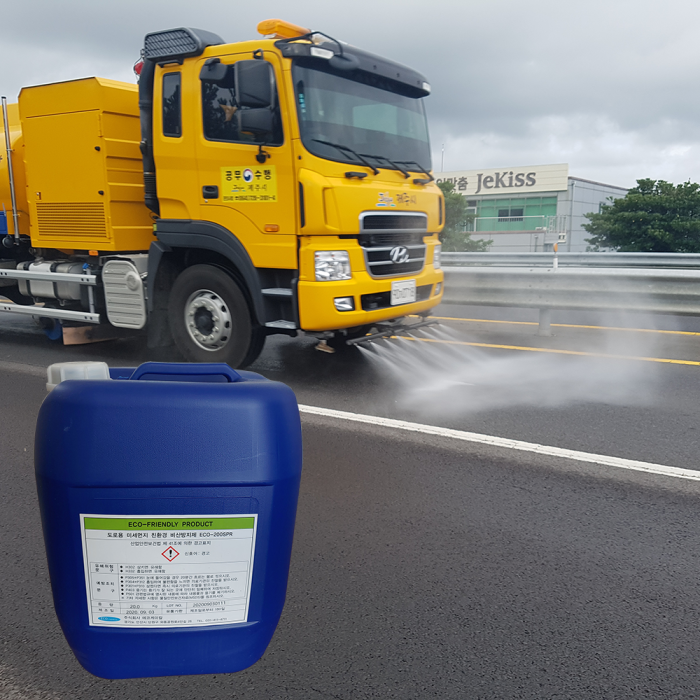
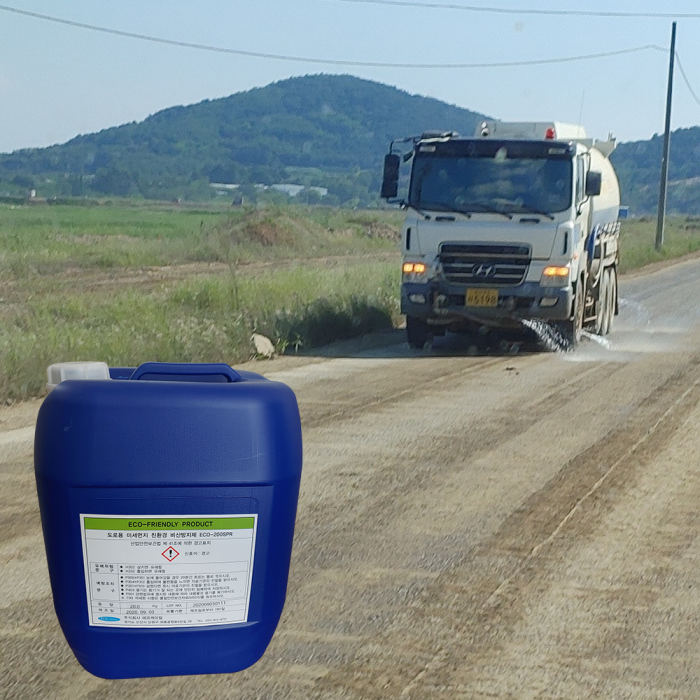
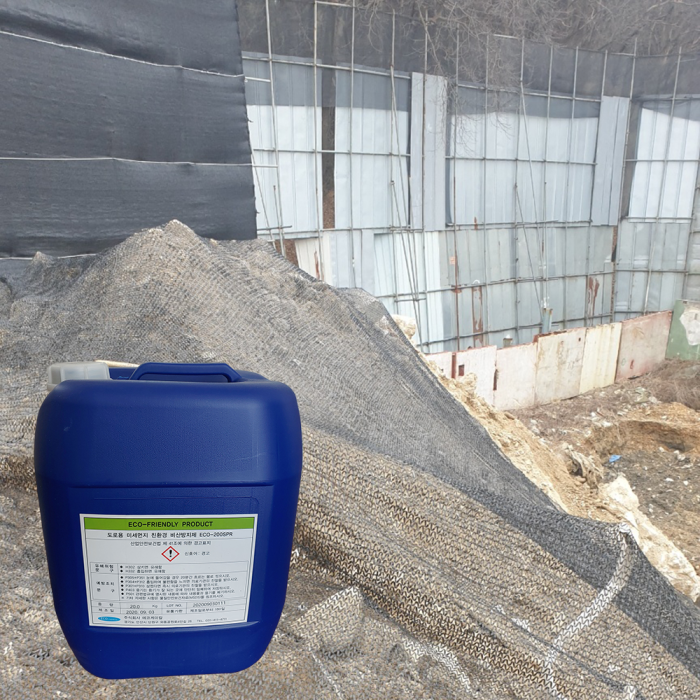
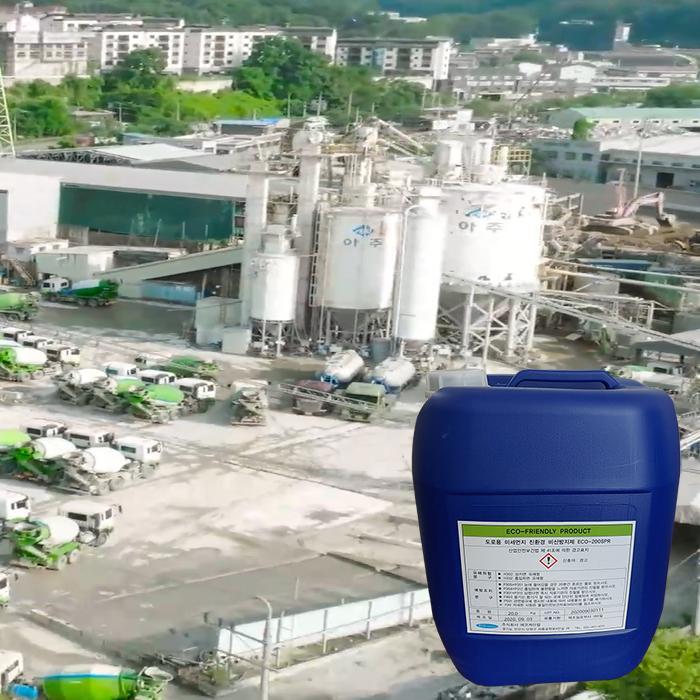
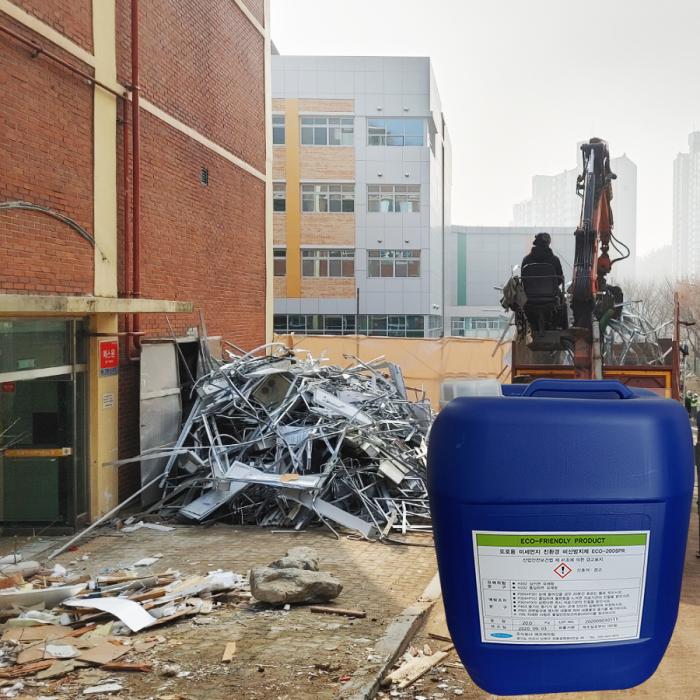
• Application (Paved roads, construction sites, construction waste storage yards, ready-mix concrete plants, building demolition sites, workplaces that generate flying dust)
• Color (Light gray)
• Feature (Diluted 200 times in water for use)
• Warranty (24 months)
• Certification (None)
Detailed Description
1) Purpose of the product
⚫ Suppresses scattering by aggregating fine dust and adsorbing it to surfaces.
2) Features of the product
⚫ Reduces fine dust using an aggregation mechanism.
⚫ Uses plant-derived polymeric compounds extracted from grains as functional materials.
⚫ Does not contain inorganic compounds, preventing the occurrence of dust from residual solids after spraying.
⚫ Does not include synthetic surfactants, preventing secondary damage to aquatic ecosystems even with long-term application.
⚫ Can be applied in various areas where fugitive dust occurs (roads, construction sites, stockyards, etc.).
3) Functionality
⚫ Aggregates fine particles smaller than 10 microns into larger dust particles over 300 microns to suppress scattering.
⚫ Dust particles aggregated to larger than 10 microns, even if dispersed, are prevented from penetrating the respiratory system.
⚫ According to the test results by the Korea Convergence Chemical Testing & Research Institute, it suppresses the scattering of ultrafine particles (PM2.5) by 98.4%.
4) Environmental Friendliness
A. Daphnia acute toxicity test
⚫ No swimming inhibition or abnormal symptoms observed at the highest concentration of 100 mg/L over 48 hours.
⚫ According to South Korea's National Institute of Environmental Research Notice No. 2023-72, water pollution process test criteria ES 04704.1b.
B. Biodegradability test
⚫ Organic substances are degraded by microorganisms in water into carbon dioxide and water by 95% over 28 days.
⚫ Under South Korea’s Ministry of Environment Notice No. 2019-45, laundry detergents containing synthetic surfactants are regulated to have a biodegradability of over 70%.
⚫ Based on the KS ISO 7827 test method.
C. Test for harmful element content in moisture dry content
⚫ No detection of eight harmful elements (Pb, As, Cd, Hg, Cr, Cu, Zn, Ni).
⚫ According to the test methods KS M 0032, KS M 0016.
5) Safety
A. Steel Corrosion Impact Test
⚫ Relative corrosivity of 0.6% compared to the reference material over 7 days, indicating a level of corrosivity similar to water, suitable for road use.
⚫ The purpose is to evaluate the impact of corrosion on steel structures in automobiles and surrounding roads.
⚫ Based on the Environmental Ministry’s Environmental Labeling Certification standard EM502-1 test method.
B. Road Skid Resistance Test
⚫ Skid resistance value is higher than the road paving standard of 40 BPN, measured at 58 BPN.
⚫ According to the KS F 2375 test method standard.
6) How to Use
⚫ Dilute the finished product 200 times with water and spray it.
⚫ Spray at temperatures above 5°C.
⚫ Spray more than 0.5 liters per square meter on paved roads.
⚫ Spray more than 1.0 liters per square meter on unpaved roads, bare ground, and stockyards.