

- PID
- 3702014
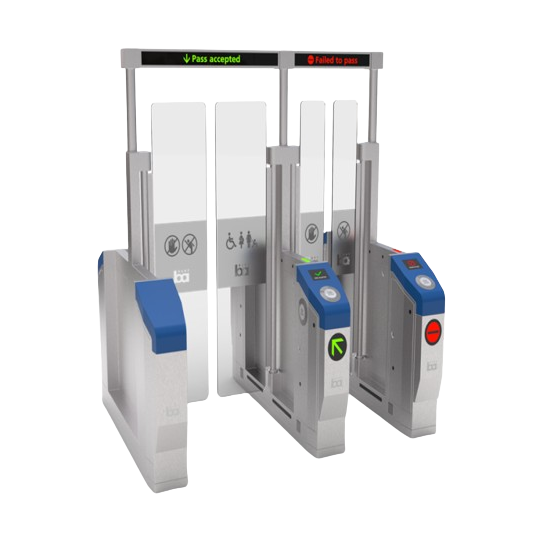
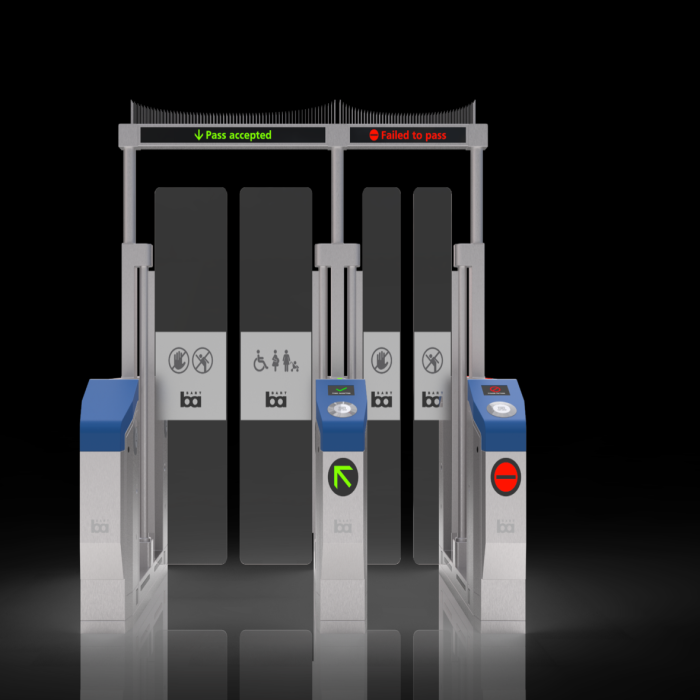
Automatic Fare Gate with 3D Sensors
This sensor technology will provide BART with real-time, granular data that can inform policies and strategies intended to minimize fare evasion and ensure revenue certainty. The resulting performance of the Fare Gate in detecting and deterring fare evasion will be scientific and agnostic, relying on precise measurement and assessment of movement through aisles.
The combination of physical “hardening” with technical innovations creates a balanced solution—neither so hardened as to appear impassable or unwelcoming, nor so open as to require continuous physical presence to deter or enforce against fare evasion. At the same time, the integration of physical features and technology, and how they perform for riders who pay fares, reflects what STraffic understands about riders’ preferences.
- Certification
-
- Award
-
- Shipping
-
- Payment
-
140+ Global Payments, trusted and secure payment provided by PayVerse.
Learn More
- Quantity
- MOQ : 100 Pieces
Product Summary
The exception detection system is composed of different sensors working in an integrated, “sensor fusion” approach to analyze each situation in the Fare Gate to achieve a highly effective detection rate. It includes sensors at the Fare Gate entrance and exit door modules at maximum height (waist level) and minimum height (floor level), operating in combination with the 3D sensor located in the Overhead Bridge. While providing the most effective tool in fare evasion prevention, the integrated solution between Fare Gate infra-red and 3D sensor also ensures the highest degree of rider safety when using fare gates equipped with swing barriers.
Detailed Description
↵
Fare Gate Sensors
The Fare Gate has 16 passenger sensors to detect passenger movement through aisles. These sensors can detect 3 types of fare evasion vectors:
- Illegal entry detection
If the Fare Gate detects someone in the aisle without paying after a predefined time (i.e., the configurable unauthorized entry time), the Fare Gate sounds an alarm and both indicator lights turn on red. The event of an unauthorized entry is reported to the DAS as well.
- Counterflow-enter detection
If the Fare Gate detects entering in the wrong direction when barriers are opened, the Fare Gate sounds an alarm and both indicator lights turn on red. The event of counter-enter is reported to the DAS as well.
- Tailgating detection
If the Fare Gate detects tailgating, the Fare Gate sounds an alarm and both indicator lights turn on the red color. The event of tailgating is sent to the DAS as well.
STraffic will provide programming for the Sensor Fusion array that defines the fare evasion vectors that require monitoring and control. When the fare evasion vectors identified through the defined sensor algorithm is detected, the Fare Gate responds locally by preventing entry and sounding alarms. Information about the event is transmitted to the Central System (DAS), and the Central System will provide a report so that the details of the fare evasion can be analyzed and reported.
