

- PID
- 3263658
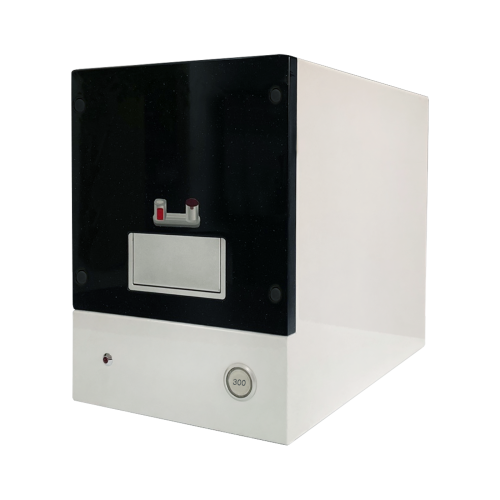
Hemorheological Marker for Diagnosis of Diabetic Complications RheoScan D300
- Certification
-
- Award
-
- Shipping
-
- Lead Time7 ~ 45days
- Modes of Transport FOB
- Payment
-
140+ Global Payments, trusted and secure payment provided by PayVerse.
Learn More
- Quantity
- MOQ : 1 Boxes
Detailed Description
RheoMeditech Inc. is a leading manufacturer of a wide range of in vitro diagnostic analyzers,
test kits, and consumables. Our line of instruments and test kits are specially designed to
elevate the best performance to hospitals and laboratories. RheoMeditech offers early screening
and diagnostics that provide health care professionals to make better decisions.
We can help people achieve better health through our early diagnosis systems with innovative technology and greater trust.
The best treatment starts with early detection.
RheoScan Measures
(1) RBC deformability
(2) RBC aggregation
Associated Pathologies
- Diabetic Kidney Disease
- Diabetic Retinopathy
- Metabolic Syndrome
Patients with DM used to have hyperglycemia and elevated fibrinogen, which leads to alterated RBC deformability
and aggregation. Alteration of deformability and aggregation of RBCs can be detected
with RheoScan system at earlier stages of diabetic complications.
Diabetic Complication Screening Device : RheoScan
| Easy Operation | Fast results | High Precision & Reliability | Small sample needed |
| - One step pipetting - One-touch operation - Fully-automated | ① Deform. : 30 sec | - Excellent screening - Clinically approved - High repeatability | ① Deform. : 6 ㎕ |
| ② Agg. – Ⅰ(CSS) : 20 sec | ② Agg. – Ⅰ(CSS) : 0.5 mℓ | ||
| ③ Agg. – Ⅱ : 120 sec | ③ Agg. – Ⅱ: 8 ㎕ |
Click here to see our product catalog for RheoScan
Impaired RBC Deformability leads to hypoxia
RBC deformability plays a critical role in blood circulation. Healthy RBCs have to pass through capillaries
whose diameter is smaller than their size. Decreased red blood cell deformability results in hypoxia
due to decreased oxygen delivery capacity in blood vessels.

Hyper-aggregated RBCs result in vascular diseases
RBC aggregation is one of the key factors in determining blood flow resistance in microcirculation.
Healthy red blood cells are easy to disaggregate and enter small vessels in an efficient manner,
whereas hyper-aggregated red blood cells do not dis-aggregate and cause local hypertension, vascular sclerosis, and hypoxia.

Microfluidics and laser optics meet Hemorheology
The Rheoscan System is an innovative technology to measure RBC deformability and aggregation
by adopting leading-edge microfluidics and laser optics.

DEFORMABILITY (EI)
• A blood sample is driven by a vacuum pressure, which is automatically decreasing with time.
• While the sample flow through a microchannel, laser light irradiated to the blood sample forms
a diffraction patterns, which is an average shape of RBCs.
• The shear stress of sample flow and diffraction patterns are simultaneously recorded and analyzed.
AGGREGATION - I (CSS)
• A blood sample is driven by a vacuum pressure, which is automatically decreasing with time.
• With flowing a sample, a laser irradiated to the blood sample and part of it is backscattered and collected on an optic detector.
• The flow shear stress and light intensity are simultaneously recorded and analyzed.
AGGREGATION - II (AI)
• A blood sample is sheared with a stirrer for 10 s and RBCs are completely disaggregated.
• With sudden stoppage of the stirrer, RBCs tend to aggregated, immediately.
• A transmitted light through the sample is recorded with respect to time and analyzed.


Visit our hompage for more information.
