



- PID
- 3016558
Suspension&Steering Parts, Control Arms, Link, Tie Rod End, Ball Joint
Request For Quotation
1. Control Arm
The control arm is one of the key components of a vehicle’s suspension system, connecting the chassis to the wheel assembly. It plays a crucial role in absorbing shocks and ensuring stable vehicle movement by controlling the suspension's motion. Control arms are typically divided into upper and lower types, although some vehicles use a single control arm system.
Control arms are made from steel, aluminum alloy, or composite materials, considering factors such as weight, performance, and durability. They also feature bushings and ball joints to facilitate smooth suspension movement and shock absorption.
Features & Benefits:
- Essential component of the suspension system
- Enhances driving stability and ride comfort
- Absorbs shocks and distributes load effectively
2. Stabilizer Link
The stabilizer link connects the stabilizer bar to the suspension arm, helping to reduce body roll when the vehicle is cornering. It prevents excessive tilting during turns or high-speed driving, improving overall stability.
Typically made of metal rods, stabilizer links have ball joints on both ends, allowing flexible movement according to the suspension's motion.
Features & Benefits:
- Reduces body roll and improves stability
- Enhances cornering performance
- Works in sync with the suspension system
3. Tie Rod End
The tie rod end is a critical part of the steering system, connecting the steering rack to the wheel hub. It ensures smooth and precise steering by transferring motion from the steering wheel to the wheels. Tie rod ends consist of inner and outer tie rods, usually incorporating ball joints to allow for smooth steering angle adjustments.
Features & Benefits:
- Essential for the steering system
- Improves steering precision and safety
4. Ball Joint
The ball joint connects the suspension to the wheel hub, allowing rotational movement in various angles. It consists of a metal ball, housing, and rubber boot filled with grease to minimize friction.
Ball joints are commonly used with control arms and tie rod ends, enhancing suspension flexibility and shock absorption. Since worn-out ball joints can affect steering performance, regular maintenance and replacement are necessary.
Features & Benefits:
- Essential suspension component
- Enables movement in multiple angles
- Enhances shock absorption and steering performance
The control arm is one of the key components of a vehicle’s suspension system, connecting the chassis to the wheel assembly. It plays a crucial role in absorbing shocks and ensuring stable vehicle movement by controlling the suspension's motion. Control arms are typically divided into upper and lower types, although some vehicles use a single control arm system.
Control arms are made from steel, aluminum alloy, or composite materials, considering factors such as weight, performance, and durability. They also feature bushings and ball joints to facilitate smooth suspension movement and shock absorption.
Features & Benefits:
- Essential component of the suspension system
- Enhances driving stability and ride comfort
- Absorbs shocks and distributes load effectively
2. Stabilizer Link
The stabilizer link connects the stabilizer bar to the suspension arm, helping to reduce body roll when the vehicle is cornering. It prevents excessive tilting during turns or high-speed driving, improving overall stability.
Typically made of metal rods, stabilizer links have ball joints on both ends, allowing flexible movement according to the suspension's motion.
Features & Benefits:
- Reduces body roll and improves stability
- Enhances cornering performance
- Works in sync with the suspension system
3. Tie Rod End
The tie rod end is a critical part of the steering system, connecting the steering rack to the wheel hub. It ensures smooth and precise steering by transferring motion from the steering wheel to the wheels. Tie rod ends consist of inner and outer tie rods, usually incorporating ball joints to allow for smooth steering angle adjustments.
Features & Benefits:
- Essential for the steering system
- Improves steering precision and safety
4. Ball Joint
The ball joint connects the suspension to the wheel hub, allowing rotational movement in various angles. It consists of a metal ball, housing, and rubber boot filled with grease to minimize friction.
Ball joints are commonly used with control arms and tie rod ends, enhancing suspension flexibility and shock absorption. Since worn-out ball joints can affect steering performance, regular maintenance and replacement are necessary.
Features & Benefits:
- Essential suspension component
- Enables movement in multiple angles
- Enhances shock absorption and steering performance
- Certification
-
- Award
-
- Shipping
-
- Payment
-
140+ Global Payments, trusted and secure payment provided by PayVerse.
Learn More
- Quantity
- MOQ : 1,000 Pieces
Detailed Description
Brand Logo
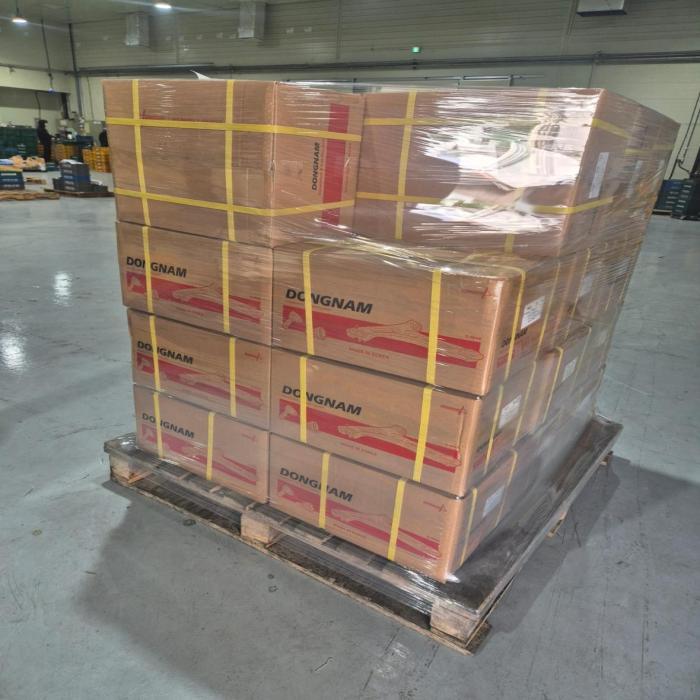
Dongnam Industrial Co., Ltd. was established in 1991 and manufactures lower and upper control arms, suspension arms, etc. for the aftermarket. We are a manufacturer specializing in the production of suspension parts. We supply to major domestic OEM parts manufacturers such as CTR, Hi-Q, Halla Holdings, and Valeo, and have the production capacity and molds for various product groups such as Hyundai, Kia, and Daewoo automobiles for 33 years. We are also a company with the technology to manage most of the major production processes in-house, stable quality, and price competitiveness. Our annual sales are approximately 15 billion won, and all raw materials and parts used in the products we produce are domestically produced. In 2007, we acquired ISO9001 and established a dedicated research and development department to possess mold development technology.
In addition, we have set up a mass production line for stabilizer links, tie rod ends, ball joints, and rack ends, which are major components of suspension and steering systems, starting in 2025, forming a complete product line for automobile body parts.
The raw materials and parts of the products we produce are made exclusively in Korea, and we strive to pursue the highest quality and supply the best products to our customers.
Keyword
Product Data
Other products of this company
